





Improve your GTAW in 3 steps
Front-end torch parts that make a difference
 |
An industry-standard manual gas tungsten arc welding (GTAW) torch package includes a torch body and a cable set, either 12-1/2 or 25 feet long. Front-end parts generally aren't included. While it may sound like the manufacturers are being cheap, it's really in your best interest, because it lets you customize your torch for the job at hand or to use front-end parts already in stock.
Everything from the handle forward is considered a front-end part. This includes gaskets, nozzles, collets, and collet bodies that make the torch functional. Typically, the torch body in a package will have the Teflon® gasket installed (see Figure 1). The gasket insulates the torch body from the gas nozzle. A torch package also may come with a back cap—but it may not be the one you need.
The most common styles of torches are the 17, 18, and 26 series that use the 10N series front-end parts (see Figure 2) and the 9 or 20 series torches that use the 13N series front-end parts (see Figure 3).
Most of these parts are standardized, meaning that a part from one manufacturer will fit another manufacturer's GTAW torch. Be sure to ask before you buy, though, because some torch manufacturers make parts that fit only their torches.
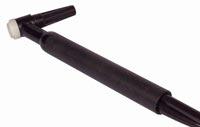 |
| Figure 1 This 20 series GTAW torch has a medium back cap and a Teflon gasket. |
To determine which front-end parts you need, first decide the type and thickness of the material you'll be welding. This will help you select which tungsten electrode type and diameter you'll need and, in turn, which size nozzle you'll need. For example, if you plan to weld 1/8-inch aluminum you'll probably choose a 3/32-in.-dia. pure tungsten electrode (AWS Classification EWP, green band), so you'll need the 3/32-in. collet and collet body and a No. 6 or 7 nozzle. On the other hand, you might choose a rare-earth tungsten (AWS Classification EWG, gray or cream band) instead.
Many equipment manufacturers offer GTAW calculators on their Web sites, in their operations guides, or as a pocket reference chart at little or no charge. These calculators are a good place to start and usually include additional information, such as recommended shield gas flow rate and amperage, but you'll need to test to be sure.
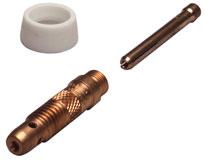 | 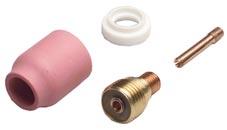 |
| Figure 2 This 10N series collet and collet body are shown with a Teflon gasket. | Figure 3 This 13N series gas lens collet body and collet are shown with an alumina nozzle and Teflon gasket. |
Nozzle Notes
GTAW nozzles are measured at the side of the nozzle farthest from the torch body in 1/16-in. increments at the inside diameter. For example, a No. 4 nozzle is 1/4 in.—or 4/16 in.—in diameter. With the exception of a specialty torch, such as one for microwelding, the smallest nozzle is the No. 4 and the largest is a No. 16, or 1-in. nozzle.
Nozzles can be made of alumina, lava, Pyrex®, or quartz.
- Alumina. The most common nozzles are made of alumina, a high-temperature, nonconductive pink ceramic material that is injection-molded and mass-produced. Alumina nozzles are durable and good for general use (see Figure 4). These nozzles are better for lower-amperage applications because the thermal shock of high-amperage applications can cause them to crack or fall off. However, they're a common nozzle choice because they're generally less expensive than the other types.
- Lava. A tan/gray-colored, high-temperature, nonconductive clay material, lava is mined and machined on a lathe for special sizes or odd-shaped nozzles and for long (L), extra-long (XL), and extra-extra-long (XXL) nozzles (see Figure 5). Lava nozzles work well in applications in which high reflective heat is present, but don't work as well in confined areas with excessive heat, which can cause the nozzle to expand and contract, resulting in breakage.
- Pyrex and Quartz. Pyrex is a low-temperature, nonconductive glass material, while quartz is a high-temperature, nonconductive glass material. These glass materials are hand-blown to make nozzles for specialty torches for microwelding or standard torches that allow for added visibility when welding in confined spaces. While the Pyrex nozzles look good, the improved visibility doesn't add much benefit for general-purpose welding. After all, you should be watching your weld puddle, not the gas coming out of your torch. Also, Pyrex nozzles get dirty quickly.
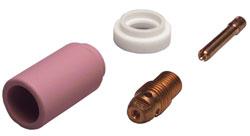 | 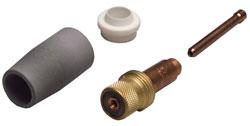 |
| Figure 4 This 13N series collet and collet body are shown with an alumina nozzle and a Teflon gasket. | Figure 5 This 10N series gas lens collet has a lava nozzle and a Teflon gasket. |
Most GTAW torch manufacturers offer basic accessory kits that include a short back cap, a basic set of alumina nozzles, an assortment of tungsten electrodes (usually 2 percent thoriated), and collets and collet bodies in the most common sizes: 0.040 in. to 1/8 in. These accessory kits usually are a good place to start, but when you're ready to optimize your torch for a variety of applications, you'll need more front-end tools in your box and on your torch.
Improve Your GTAW Torch, Performance
With basic torch knowledge in hand, you should be armed and ready to find the best grouping of front-end parts to help improve your GTAW performance. The following are three steps you can take to enhance your GTAW experience:
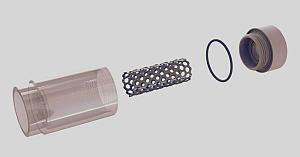
- Change your collet body. One of the best improvements you can make to the performance of your torch is to replace the standard collet body with a gas lens collet body. A gas lens version is an enhanced collet body constructed of a series of concentric, layered screens of varying mesh engineered to improve shield gas coverage. The screens generate a laminar gas flow, optimizing the weld zone coverage and eliminating turbulence, which can draw in contaminants from the surrounding air.
Using a gas lens collet body will help improve weld quality on all materials, but it's especially beneficial with stainless steel and materials such as aluminum and titanium, which are particularly sensitive to oxygen contamination. When welding those kinds of materials, you also may need a flooding cup, trailing shield, or other device that can provide additional shield gas coverage. Some of these devices attach directly to your torch, while others may attach to a secondary gas source.
A gas lens also allows the tungsten electrode to be extended beyond the end of the gas cup by as much as 1 in. This electrode extension helps improve visibility and can reduce tungsten inclusions and weld defects. - Use the right tungsten. Using the right tungsten for your application will help you optimize your torch's performance. While a manufacturer's welding calculator is a good starting place, it's always a good idea to test first. Try an electrode out to see how easily the arc starts, how long the tip lasts, how the tungsten reacts, and how it works, in general, for you. Since the development of GTAW, many improvements have been made in electrode production, such as additives that improve arc starting and tip life.
- Prepare your electrode properly. Finally, be sure to prepare your tungsten electrode properly, and always grind your electrode longitudinally, creating grind "lines" that run the length of the electrode. This will reduce arc wander. Use a dedicated grinding wheel to prevent electrode contamination. Grinding wheels should be made of diamond or borazon. For added benefit, use a tungsten grinding machine that will allow you to select the grind angle and repeat it.
| Parts Versus Consumables |
| The word consumable traditionally has referred to material that's consumed within the weld or in the process of welding. Wire, rod, tungsten electrodes, and shielding gas are consumables. Front-end parts often are considered consumables because they wear out or break and need to be replaced. While they may not be the most inexpensive, well-manufactured GTAW torch accessories are engineered to work together, eliminate tolerance stack-up problems, provide proper torch insulation, and prevent gas leaks. Make sure all the parts of your torch fit together properly to ensure that oxygen doesn't leak into your weld zone and cause contamination. |
Note: if you're grinding thoriated tungsten, make sure to control and collect the dust, have an adequate ventilation system at the grinding station, and follow manufacturer's warnings, instructions, and material safety data sheets.
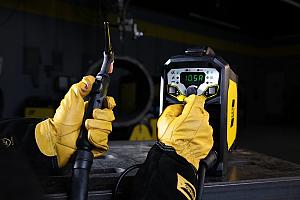
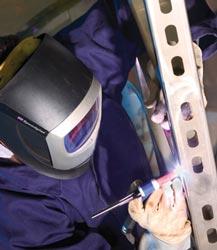
Jennifer Simpson is marketing manager for Arc-Zone.com Inc., 2091 Las Palmas Drive, Suite C, Carlsbad, CA 92011-1551, 800-944-2243, info@arc-zone.com, www.arc-zone.com. Introductory photo courtesy of Miller Electric Mfg. Co., Appleton, Wis.
About the Author
About the Publication

subscribe now
The Welder, formerly known as Practical Welding Today, is a showcase of the real people who make the products we use and work with every day. This magazine has served the welding community in North America well for more than 20 years.
start your free subscription- Stay connected from anywhere
Easily access valuable industry resources now with full access to the digital edition of The Fabricator.

Easily access valuable industry resources now with full access to the digital edition of The Welder.
Easily access valuable industry resources now with full access to the digital edition of The Tube and Pipe Journal.
Easily access valuable industry resources now with full access to the digital edition of The Fabricator en Español.
- Podcasting

In this episode of The Fabricator Podcast, Caleb Chamberlain, co-founder and CEO of OSH Cut, discusses his company’s...