








Know your TIG torch
Advice and maintenance practices to ensure quality
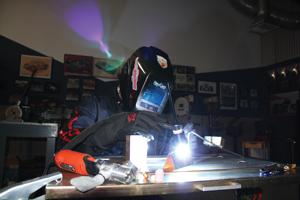
Photos courtesy of Matt Munz, Arc-Zone.com Inc., Carlsbad, Calif.
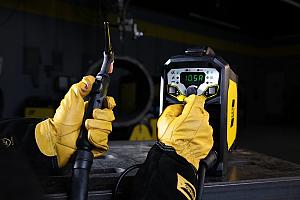
When times are tough our initial instinct is to save money and buy cheap. That's not always the best strategy, especially when you're looking at a new gas tungsten arc welding (GTAW) torch.
One of the biggest differences between a low-quality and high-quality torch is the materials used in manufacturing it, as well as the production process. Quality torches last longer, run cooler, provide a stable arc, and offer overall improved weld quality.
Selecting the Right Torch
First, make sure that you get the torch best-suited for your welding application. You'll need to know at what amperage you'll be welding, and select your torch accordingly. In general, for applications under 200 amps you'll be fine with an air-cooled torch. Though heavier-duty, air-cooled torches that go up to 300 amps are available, the higher-amp torches can be heavier and bulkier. For applications over 200 amps, you'll want to consider a water-cooled torch.
While using a torch above its amperage rating won't cause it to explode, it will make it too hot to handle, and ultimately the more intense heat will cause premature degradation of the torch itself. The silicone rubber can start to deteriorate, loosening its bond to the torch, drying out and cracking. The O-rings and gaskets will suffer premature damage as well.
Manufacturing a GTAW Torch
A quality GTAW torch is made with leaded nickel copper, not the more common tellurium copper, which is less durable. In other words, on a leaded nickel copper torch the torch body threads will last longer and the collets won't buckle and twist when you thread them onto the torch. Leaded nickel copper is also a better conductor, so you'll get the amperage you paid for.
Silicone rubber, rather than a phenolic compound, is best for the insulation material of the torch body, but the quality of that may be variable, too, from heat tolerance of the material to how well the body is bonded to the copper innards of the torch. A quality manufacturer will use high-dielectric silicone rubber that can tolerate high voltages and is not susceptible to cracking if dropped.
Gaskets are made of Teflon®. You'd think all Teflon is created equal, but it's not. A high-quality torch has a high-performance, glass-filled Teflon material that has a much longer life span and higher heat tolerance than "regular" Teflon.
Some torches have handles made from nonreinforced material that may crack and split or have sharp edges that can cut the hose. Also, sometimes the torch handle is not long enough to properly insulate the high-frequency current of the GTAW process. Other manufacturing quality issues include industry-standard cables and hoses that just don't fit properly, which can affect gas and water flow.
Maintaining Your GTAW Torch
When you buy a quality torch, you'll want to take care of it. Here are some tips to help you do that.
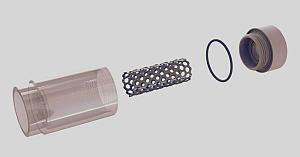
- Start with a visual inspection. Remove the backcap and take a look at the O-ring. Make sure there are no rips or tears and that the O-ring is not dried out or cracked. A damaged O-ring can draw air into the torch body, contaminating the weld zone with oxygen. If your torch has a gas valve, check the O-ring at the stem there as well. A new O-ring costs about a dollar.
- Take a look at the gaskets on the top and bottom of the torch. Make sure there is no cracking and that the gaskets are not warped. Again, this is an inexpensive part to replace if necessary—generally less than $2.
- Look for cracks in the handle and, if necessary, replace it to avoid an electrical shock. Do not duct tape it back together. A replacement handle should cost less than $10 and could save a much more expensive trip to the emergency room.
- Inspect the nozzle to look for signs of wear such as distortion, cracking, or blackening. Replace, if necessary, because a damaged nozzle may hinder shield gas coverage.
- Inspect the insulation surrounding the torch body. If you see any cuts or cracks, replace it.
- Make sure that connections to the hoses and power cable are tight and not leaking. Be careful not to overtighten the connections, however, which can restrict or cut off gas and water flow.
- Keep the threads connecting the backcap and torch body clean. Periodically use a tap repair kit to chase the threads in the head to guard against thread galling, which can strip out the threads on the backcap or the collet body.
- Protect your hoses and cables with a cable cover. This is especially important if you are out in the field or moving from location to location, dragging the cables along the shop floor.
- From time to time remove the collet and collet body and wire brush them to clean off any oxides that have accumulated, which can lead to an erratic arc.
- Double-check your power connection. Make sure it fits snugly to the power source to prevent overheating and damage to your torch cable. Also be certain all gas and water fittings are secure to prevent leaks.
About the Author
About the Publication

subscribe now
The Welder, formerly known as Practical Welding Today, is a showcase of the real people who make the products we use and work with every day. This magazine has served the welding community in North America well for more than 20 years.
start your free subscription- Stay connected from anywhere
Easily access valuable industry resources now with full access to the digital edition of The Fabricator.
Easily access valuable industry resources now with full access to the digital edition of The Welder.
Easily access valuable industry resources now with full access to the digital edition of The Tube and Pipe Journal.
Easily access valuable industry resources now with full access to the digital edition of The Fabricator en Español.
- Podcasting

In this episode of The Fabricator Podcast, Caleb Chamberlain, co-founder and CEO of OSH Cut, discusses his company’s...