










Top five questions about anodizing architectural tube
Science and nature come together
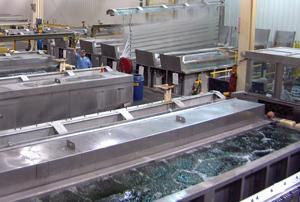
During anodizing, the aluminum oxide layer is made thicker by passing a direct current through a sulfuric acid solution, with the tube serving as the anode, the negative electrode. The current releases hydrogen at the cathode, the positive electrode, and oxygen at the surface of the aluminum anode, creating a buildup of aluminum oxide.
Because of its strength and durability, anodized aluminum is used in a number of applications. Many structures and buildings have anodized aluminum in places where the metal framework is exposed to the elements, such as handrails, metal coping, column covers, HVAC ducts, and decorative metalwork.
1. What Is Anodizing?
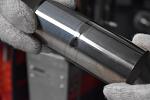
Anodizing combines with nature to create one of the world's best metal finishes. It is the process of electrochemically controlling, accelerating, and enhancing oxidation of an aluminum tube, creating a durable, scratch-resistant coating on the surface (see lead image).
Preparation. The anodizing process typically begins with the aluminum tube being cleaned in a nonetching alkaline chemical cleaner to remove all shop dirt, water, and soluble oils that may have accumulated on the tube's surface during handling and manufacturing. After it is cleaned, the tube is ready for caustic etching.
The caustic etch process produces a matte finish and also minimizes minor surface imperfections, such as light die lines and travel marks. Caustic etching does not eliminate all surface imperfections. A good rule is if the imperfection can be felt with a fingernail before the tube is anodized, it is likely that it will not be removed by caustic etching.
The tube is then desmutted and rinsed to remove residues left from the caustic etch. This is the final preparation stage prior to anodizing.
The Process. The sulfuric acid (Type II) anodizing process produces a protective and decorative oxide finish on aluminum tube. The aluminum oxide layer is made thicker by passing a direct current through a sulfuric acid solution, with the tube serving as the anode, the negative electrode. The current releases hydrogen at the cathode, the positive electrode, and oxygen at the surface of the aluminum anode, creating a buildup of aluminum oxide.
Coloring. If the tube requires coloring, it is moved to a two-step electrolytic coloring tank. Tin metal is electrochemically introduced into the anodic pores to produce bronze tones ranging from light champagne to black (see Figure 1). After it is anodized and colored, the material is sealed in a midtemperature hydrothermal seal and is then given a final hot water rinse. This final, important step ensures that the high-quality anodized finish maintains its color for many years.
2. What Are the Advantages and Disadvantages of an Anodize Finish?
Advantages. An anodize finish satisfies the requirements for aluminum tube:
- Durability. Anodize offers a hardness and scratch resistance comparable to a sapphire, the second-hardest substance after a diamond. The aluminum oxide that is formed is an integral part of the substrate and is much harder than the aluminum it replaces. This is why it gives excellent wear and abrasion resistance. Because the coating is an integral part of the substrate, the anodic coating will not chip, peel, or flake over time.
- Color stability. Exterior anodic coatings provide good stability to ultraviolet rays and do not chip or peel. The process is repeatable.
- Ease of maintenance. Scratches and wear from fabrication, handling, installation, surface cleaning, and usage are rare. Rinsing or mild soap and water cleaning usually will restore an anodized surface to its original appearance. Mild abrasive cleaners can be used to remove more difficult deposits. Anodized surfaces do not show fingerprints.
- Appearance. Anodizing offers a large and increasing number of gloss and color choices. Unlike most other finishes, anodizing allows the aluminum to maintain its metallic appearance (see Figure 1).
- Cost. The initial finishing cost is relatively minimal; so too are its maintenance costs.
- Health and safety. Anodizing is a safe process that is not health-hazardous: An anodized finish is chemically stable, will not decompose; is nontoxic; and is heat-resistant to the melting point of aluminum (1,221 degrees F). Because the anodizing process replicates naturally occurring oxidation, it is nonhazardous and produces no harmful or dangerous byproducts.
- Color choices. Architectural anodize finishes are limited to certain colors, including clear (silver), black, champagne, and traditional bronze tones.
- Color match. The color obtained in the anodize process depends on many factors, such as alloy, temper, and shape; therefore, it is impossible to produce a perfect color match.
- Touchups. Anodize finishes are factory-applied, so field repair touchups must be done with paint. A paint finish will never match an anodize finish well.
- Visible surface imperfections. Anodize is an integral part of the aluminum; therefore, heavy die lines, dents, and dings on the aluminum part will show through the finish.
Disadvantages. A few challenges associated with an anodize finish are:
3. Which Classifications Apply to Anodizing?
Architectural Class I and Class II anodic coatings are designations created by the American Architectural Manufacturers Association (AAMA) for the purpose of codifying the specification of anodized aluminum (see Figure 2).
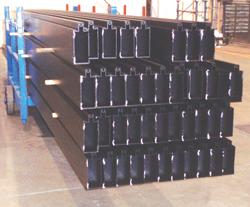
Figure 1. Tin metal is electrochemically introduced into the anodic pores to produce bronze tones ranging from light champagne to black.
- Class I coating has a mil thickness of 0.7 (18 microns) or greater.
- Class II coating has a minimum mil thickness of 0.4 (10 microns).
| Weathering Performance | ||
|---|---|---|
| Characteristic | Class I | Class II |
| Color & Gloss Retention | Excellent | N/A |
| Chalk Resistance | Excellent | N/A |
| Color Options | Few | Few |
| Gloss Options | 40 - 80 | 40 - 80 |
| Hardness | Excellent | Very Good |
| Salt Spray Resistance | Fair | Very Poor |
| Chemical Resistance | Good | Fair |
| Effect of Poor Substrate Quality | Significant | Significant |
| Warranty | 5 years | None |
| Initial Cost | Low | Very Low |
A Class I coating is a high-performance anodic finish used primarily for exterior building products and other products that must withstand continuous outdoor exposure.
A Class II coating is a commercial anodic finish recommended for interior applications or light exterior applications receiving regularly scheduled cleaning and maintenance, such as storefronts.
The AAMA 611 specification for anodized architectural aluminum is the most commonly used, although other specifications may be followed as required.
4. What Material Precautions Should Be Taken?
Preparing the aluminum tube correctly for anodizing will reduce waste and produce the optimal finish:
- Maintain material consistency. The easiest way to ensure consistency in aluminum tube is to work with one metal source/extruder per project.
- Do not mix aluminum alloys. Mixed alloys, or even mixed tempers, will not produce uniform results. For best results, use 6063 alloys for extrusions and 5005 for sheet stock.
- Perform as much bending and forming as possible before finishing. Anodic films are very hard. As a result, most postproduction bending causes the film to "craze," which produces a series of small cracks in the finish, giving it a spider web appearance.
- Store material safely. Prior to an-odizing, store the mill aluminum tubes in a dry and controlled environment. It is important to do this throughout the fabricating and finishing processes. Do not allow moisture to build up between the tubes, because this will cause severe corrosion, known as white rust, which cannot be removed in the finishing process.
- Avoid using tape or adhesives. Tape or adhesive on the aluminum may leave a residue that cannot be removed in the anodize process.
- Discuss the desired specification with the finisher. In the architectural industry, the most recognized specification is AAMA 611-98. If specific parameters are required, it is important that the finisher be furnished with the desired requirements to ensure that the finish satisfies expectations.
- Be aware of anodizing's effect on welds. The weld on a tubular component has a different color than the unjoined areas of the component. The heat generated during the welding process can disturb the metallurgy on nearby metal, or heat-affected zone (HAZ), and cause a localized discoloration after anodizing. Use the proper 5356 alloy welding wire and the lowest heat possible.
- Use proper drainage. Holes are essential to prevent solution from being trapped. Drainage of the solution allows trapped gas to escape from the tubes. Even the tightest of welded joints will allow anodized chemicals to weep out.
- Let the finisher know where parts can be racked. There are a variety of ways anodizers rack tubular components, from welding material to spline bars to a screw-down bolt system. In any case, contact marks are visible on the aluminum. It is important to define what is acceptable and what is unacceptable regarding exposed surfaces and rack marks.
- Save on material handling by cutting and punching aluminum after it's finished. Cutting and punching may be performed either before or after the material has been anodized. Cutting and punching cut-to-size tube after it is sent to the anodizer may be more expensive because of the extra material handling and load size requirements. Cutting and punching before anodizing may be more cost-effective, and doing so means that the cut and punched edges will be anodized also.
- Use good shipping practices. The fabricator should package the tubes carefully before shipment to the finisher to ensure the metal arrives dry and free of scratches and dents.
- Avoid sending the finisher aluminum tubing with scratches, dings, heavy die lines, and die pickup. These metal quality defects will show through the anodize finish; tubes without defects will exhibit a higher-quality finish.
5. How Should Anodized Aluminum Tubing Be Cared for After Fabrication?
Initiate cleaning procedures for aluminum as soon as it is practical to do so after installation is completed to remove construction soils and accumulated environmental soils and discolorations.
The simplest way to remove light soils is to flush the surface with water using moderate pressure. After the surface is air-dried, if soil is still present, scrub it with a brush or sponge and try concurrent spraying with water. If soils still adhere, use a mild detergent cleaner with brushing or sponging. Use uniform pressure to wash it—first horizontally then vertically. Thoroughly rinse the surface with clean water.
You must take certain precautions when cleaning anodized aluminum surfaces. First, identify the finish to select the appropriate cleaning method. Never use aggressive alkaline or acid cleaners. Avoid cleaning hot, sun-heated surfaces because possible chemical reactions will be highly accelerated, resulting in nonuniform cleaning.
Strong organic solvents, while not harmful to anodized aluminum, may extract stain-producing chemicals from sealants and affect the function of the sealants. Strong cleaners should not be used on window glass and other components on which it is possible for the cleaner to come in contact with the aluminum. Avoid excessive abrasive rubbing because it could damage the finish.
For added protection, apply wipe-on surface protectants, which are estimated to provide protection for 12 to 24 months in the harshest environments and make subsequent maintenance easier.
One of the best steps a tube fabricator can take to ensure a quality tube finish is to form a good working relationship with the finisher. Ongoing, open communication will be among the most valuable factors in minimizing waste and maximizing results.
About the Author
About the Publication

subscribe now
The Tube and Pipe Journal became the first magazine dedicated to serving the metal tube and pipe industry in 1990. Today, it remains the only North American publication devoted to this industry, and it has become the most trusted source of information for tube and pipe professionals.
start your free subscription- Stay connected from anywhere
Easily access valuable industry resources now with full access to the digital edition of The Fabricator.

Easily access valuable industry resources now with full access to the digital edition of The Welder.
Easily access valuable industry resources now with full access to the digital edition of The Tube and Pipe Journal.

Easily access valuable industry resources now with full access to the digital edition of The Fabricator en Español.
- Podcasting

In this episode of The Fabricator Podcast, Caleb Chamberlain, co-founder and CEO of OSH Cut, discusses his company’s...