












President


President
Witt Gas Controls LP

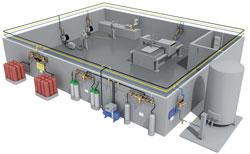
Today's job shops must be prepared to deal with a variety of materials for fabrication and welding. As each material may require a different mixed shielding gas for gas metal arc welding (GMAW), familiarize yourself with these gases and the most efficient supply methods for various applications.

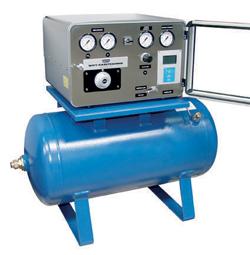
Now processing a greater variety of materials with their lasers, fabricators are exploring new assist gas blends of up to four gases. What's the best way to blend and deliver these gases? For some, on-site blending systems can help optimize cost savings and improve quality.
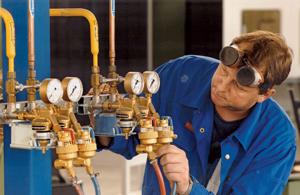
If properly used and well-maintained, this equipment can cut, heat, and weld metals safely. But damaged, worn, or improperly handled equipment can lead to safety hazards such as fire and explosions that can cause serious injury or death. To know how to handle and care for the equipment and devices found in oxyfuel cutting and welding, you have to first be familiar with them and the kind of care they need.
As explained in Part I of this two-part series, many factors can affect laser processing efficiency. This article explains basic laser beam delivery requirements; discusses laser gases and supply methods; and lists common problems caused by using incorrect pressure, flow, and laser speed.
Many factors can affect laser processing efficiency. This article, Part I of a two-part series, stresses laser system maintenance and discusses factors that can affect beam quality and efficiency—namely, impurities introduced by laser gases and gas supply systems and how to prevent them. It also has a supply system requirements list. Part II discusses beam delivery to the workpiece and the gases used to process the material.
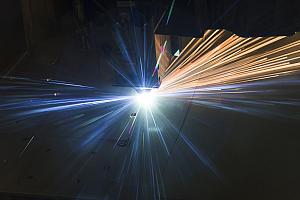
Photo courtesy of TRUMPF Inc.Metal fabricators continue to find new applications for carbon dioxide (CO2) lasers. New uses combined with increased just-in-time processing, and lights-out operation place greater demands on laser, assist, and process gas supply and delivery systems—demands that...
When laser gases are used in significant volumes or in an around-the-clock operation, a centralized gas delivery system is a practical necessity. A well-conceived delivery system reduces operating costs, increases productivity, and enhances safety.
The introduction of gas metal arc welding (GMAW) and gas tungsten arc welding (GTAW) in the 1940s changed the way metals were joined. The automation of these processes meant the gas supply system also had to be automated to achieve optimal productivity.
Mixing oxygen with fuel gases for brazing, cutting, heating, and welding metal has been around since the early 1900s. Oxyfuel processes have remained in use over the years despite the introduction of other metal fabrication processes, such as arc welding, plasma cutting, and laser materials processing. Finding the most economical method for supplying oxyfuel gases requires a basic understanding of the process.
The metal fabrication industry has used compressed gases for more than one hundred years. Oxy-fuel cutting and welding have existed since the beginning of the 20th century. The more automatic welding processes, such as gas metal arc welding (GMAW) and gas tungsten arc welding (GTAW), began as early as 1920.
Proper shielding gas selection is a critical step in successful welding, but setting the flow rate likewise is a necessary consideration—one that is frequently overlooked.
Selecting the right shielding gasses for your welding operation can mean the difference between mediocre production rates and peak efficiency.
How you store and deliver assist gases to your laser cutting system is of critical importance to the effectiveness of your whole fabricating operation.
In this episode of The Fabricator Podcast, Caleb Chamberlain, co-founder and CEO of OSH Cut, discusses his company’s...