












George Winton
Winton Machine Co.
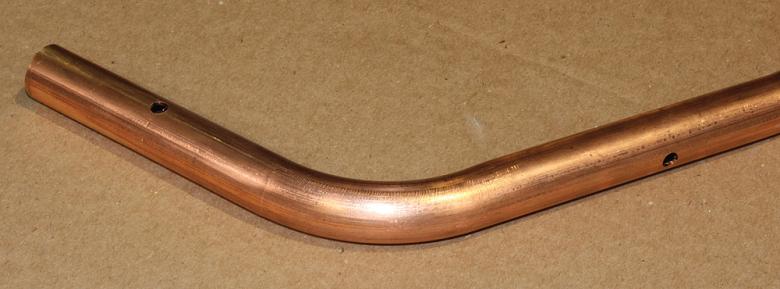
Business as usual versus a change for good
Columnist George Winton discusses a way to combine two operations into one seamless process by adding a drill to a CNC tube bender.
Stationary parts don't make money
Seeing bins of parts lying around in your shop? Maybe it’s time to get away from the large-batch method and try one-piece flow. Rather than make a large quantity of Component 1, then Component 2, then Component 3, while a welder downstream waits for Component 3, you could set up a system of one-piece flow that sends a kit of three components. The key to implement this strategy is the bender software.

Assessing the arc
Large-radius bends are used in many places, such as appliance handles and automobile components. For measuring large-radius bends, fabricators have at least three options: go/no-go fixtures, entering the bent part’s measurements into a CAD program and using it to calculate the radius, and a depth gauge.
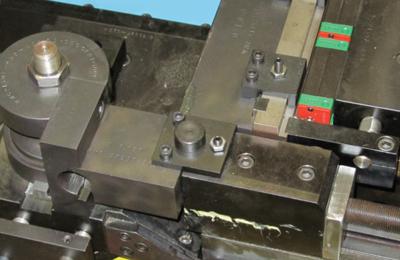
Holding the dies
There are a few popular ways to affix the clamp die and pressure die to a rotary draw bending machine. All aim to accomplish the same thing: provide precise vertical alignment to the mating bend die and provide rigid support for the respective die during the bending process so it resists the...
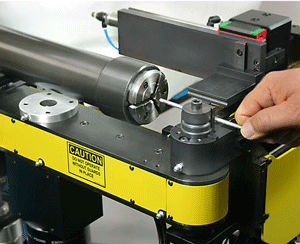
Getting a grip on tube bending
A collet closer, commonly found on CNC or NC tube benders, serves an important role in the bending process. When quality is good, little attention is paid to its operation. When one or more quality parameters fall outside of acceptable limits, often the collet closer again is overlooked. A...
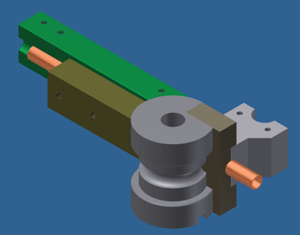
Ironing the wrinkles out of copper tubing
A wiper die is helpful for making wrinkle-free bends. Understanding how one works can help you decide if you need to use one.
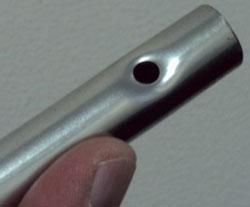
Get the slug out
Punching a hole in a tube is one thing; getting the slug out is something else altogether. Even if most of the slugs exit without a problem, the occasional hanging slug can cause a serious problem. Two methods are mechanical force and air pressure.
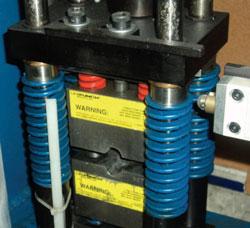
Sizing up the job
Accounting is straightforward, but it’s not iron-clad; fabricators have latitude in the accounting system they use to bid on contracts. A bottom-up approach, one that analyzes all the costs that go into making a component, is suitable for many parts. A top-down approach looks at the part and asks how much the market will bear. Choosing one or the other is a matter of understanding the market for the part.
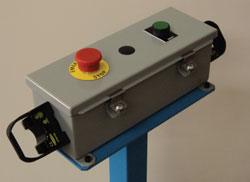
The axis of safety
A tube bender can be considered a collection of power presses and, as such, it needs more than just a few conventional barriers between the operator and the machine. Safety mats, interlocked switches, emergency-stop switches, and interlocked side plates are a few of the safety devices available to machine tool manufacturers.
Feeding the process
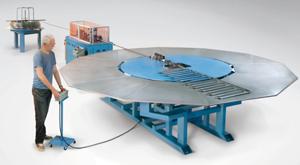
Whether a bending process starts with a cut length of tubular product or a coil, gravitational or torsional forces can lead to unwanted variations in the finished product. In the case of gravity, tube supports can counteract it; for torsion, it’s a matter of matching the coil’s output to the bender’s input.
Doing more with less
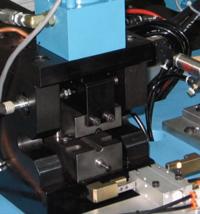
Loading and unloading tube for fabricating often is a manual process. Because labor rates in the U.S. are higher than those in many other countries, manual loading and unloading isn’t competitive. Using an automatic loader/unloader can change that, moving an operation from red to black.
Making a workhorse run
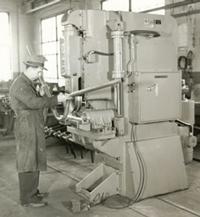
Vertical compression tube benders have been around for more than 50 years (see Figure 1). Historically associated with high-volume bending, these benders continue to play a role in production environments where parts have just one or two bends. Also known as press benders, they have stood the...
Putting a few end forming basics to work
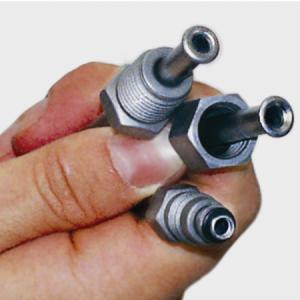
Whether maintaining or changing the OD, knowing the basics of end forming—especially friction and lubrication—can help achieve a successful result.

Coax Facts
Continuous improvement and statistical process control are useful,time-tested techniques—they have been used since the 1950s—buttheir use must be tailored to specific applications. For example, atypical manufacturing metric is parts per minute, but many rollformers should measure feet per minute. This and other tips can helproll formers accurately evaluate their productivity and measure theimpact of process improvements.
The ins and outs of extrusion bending
Extrusions can be tricky to bend and handle. Paying close attention tobender selection, die design, programming, and material handling can help to ensure efficient and productive bending.
- Podcasting

In this episode of The Fabricator Podcast, Caleb Chamberlain, co-founder and CEO of OSH Cut, discusses his company’s...
- Trending Articles
1
Tips for creating sheet metal tubes with perforations
2
JM Steel triples capacity for solar energy projects at Pennsylvania facility

3
Are two heads better than one in fiber laser cutting?
4
Supporting the metal fabricating industry through FMA

5
Zekelman Industries to invest $120 million in Arkansas expansion