







Marketing Segment Manager - Oil and Gas


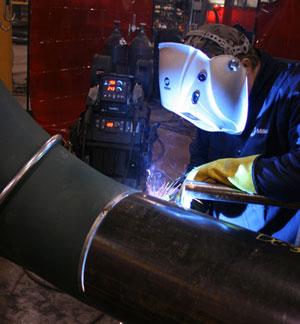
When welding process pipe, welders need to determine which wires can provide the most appropriate results for every weld pass—root, fill, and cap—and be certain that they are selecting the highest-quality filler metal.
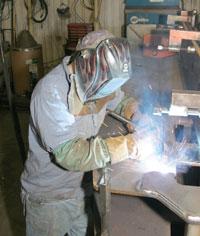
The goal when welding any material is to change its microstructure as little as possible and to preserve its mechanical and chemical properties. To achieve this you must be able to determine its weldability, control the heat input, and prevent rapid cooling.
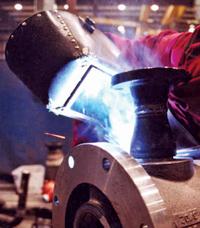
The X-factor, also known as the Bruscato factor, is an important equation for anyone welding with chrome-moly steel. The equation will help you test your filler metals for levels of phosphorus, antimony, tin, and arsenic that could make a weldment susceptible to temper embrittlement.
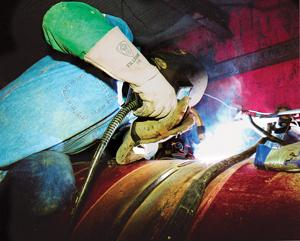
Alloys comprise 1 to 5 percent of a particular steels content and are added to provide the steel with a specific attribute. Knowing the type of low-alloy steel you have will help you to choose the right filler metal and achieve good weld quality.
When welding a chromium-molybdenum alloy, selecting the optimal filler wire is critical to the long-term durability of the weld. Fortunately, matching the filler metal to the alloy is no more difficult than it is for matching a filler metal to any other family of alloys. Understanding the chemical and mechanical properties of the materials can go a long way in making strong, corrosion- and creep-resistant welds.
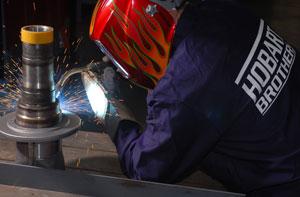
Arming yourself with basic information about flux-cored wires can help you decide if these consumables are right for your welding application. Available in gas-shielded and self-shielded, flux-cored wires require less skill to use than other filler metals and commonly are used for general fabrication, pressure vessels, petrochemical piping, and heavy-equipment manufacturing
Before welding abrasion-resistant plate, it's important to take certain precautions and choose the most appropriate filler metal for your application and weld metal.
In this episode of The Fabricator Podcast, Caleb Chamberlain, co-founder and CEO of OSH Cut, discusses his company’s...