







Hydroforming
Hydroforming - Hydroforming isn't as mysterious as it seems. This technology area is full of articles, including case studies, on hydroforming sheet metal and tubular sections.
-

- From The Fabricator
Jones Metal Products celebrates 100 years in business
Established in 1923 on the site of a former metal stamping and porcelain enameling company, Jones Metal Products is marking 100 years in business in West Lafayette, Ohio.
-
- From The Fabricator
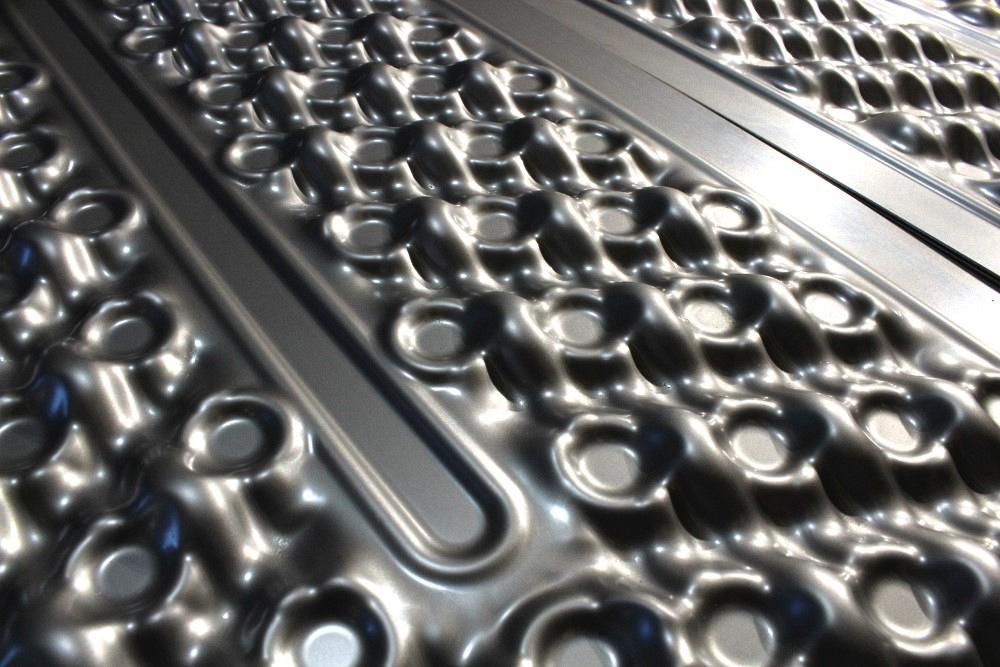
Alternative hydroforming tech dispenses with bladder, achieves 60,000 PSI
A technology related to hydroforming, named fluidforming, dispenses with bladders and diaphragms, achieving much greater pressures and more comprehensive metal forming capabilities.
-
- From The Fabricator
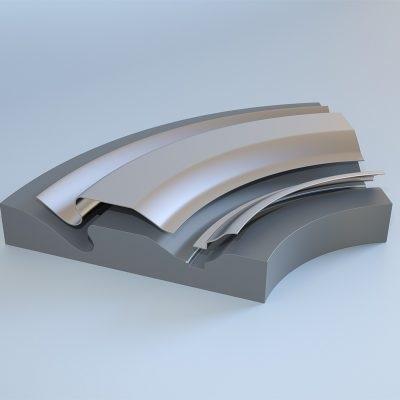
Quintus Flexform press eliminates need for matched male/female die sets
The Quintus Flexform fluid cell press uses hydroforming technology, employing extremely high hydraulic pressure against a flexible rubber diaphragm to shape sheet material against a single tool half. The process enables the forming of a variety of geometric shapes out of sheet metal alloys from...
-
- From The Fabricator
Jones Metal changes ownership, chairman to retire
Jones Metal Products of West Lafayette, Ohio, has announced that chairman of the board and owner Marion Sutton will retire and has sold the metal forming company to President and CEO Dan Erb. Sutton is the third generation of her family to own Jones Metal, started in 1923 by her grandfather, Frank...
-
- From The Fabricator
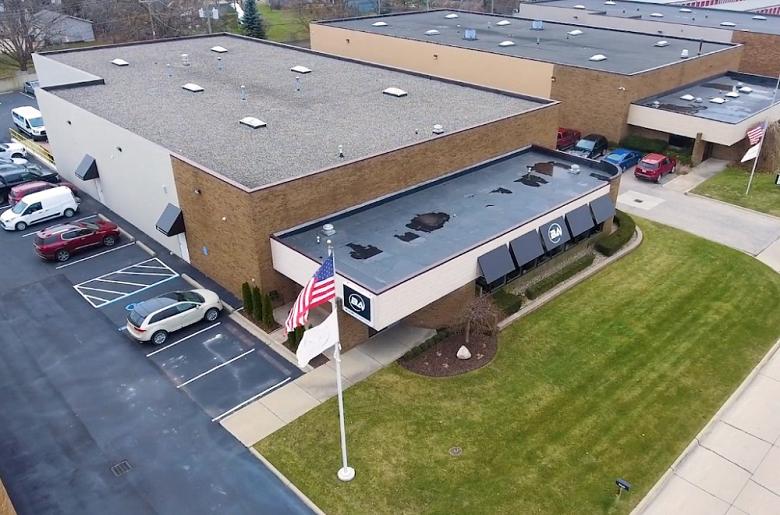
Bilsing Automation relocates North American facility
Bilsing Automation North America, a supplier of automated tooling systems for stamping, fabrication, hydroforming, injection molding, and packaging, has moved to a new facility in Roseville, Mich., just down the street from its previous location. The new facility offers 15 percent more...
-
- From The Fabricator
Precision Aerospace completes recapitalization transaction
Phoenix-based Precision Aerospace LLC, a provider of complex metal assemblies for aerospace and industrial applications, has completed a recapitalization transaction led by investment firms Willcrest Partners and Curran Companies. Precision Aerospace produces prototypes and production-run metal...
-
- From The Fabricator
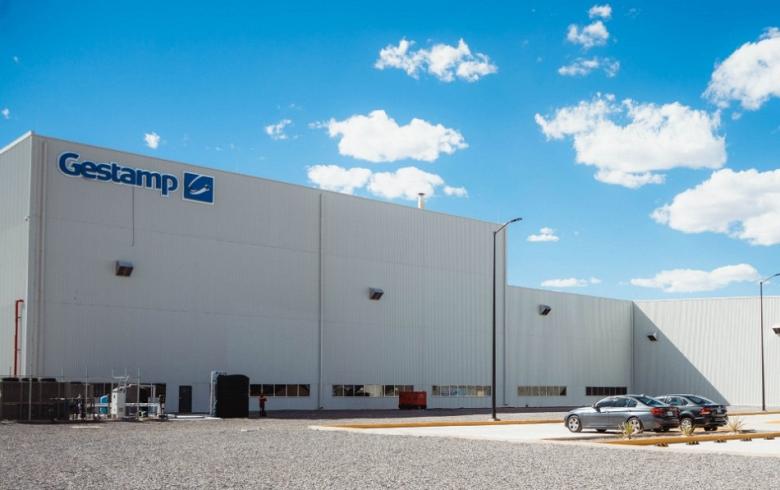
Gestamp opens new plant in Mexico
Gestamp, a multinational manufacturer of highly engineered metal components for the automotive industry, has inaugurated its new plant in San Luis Potosí, Mexico. The $86 million facility is the first Gestamp plant in Mexico for manufacturing chassis parts. Employing more than 300 people, it is...
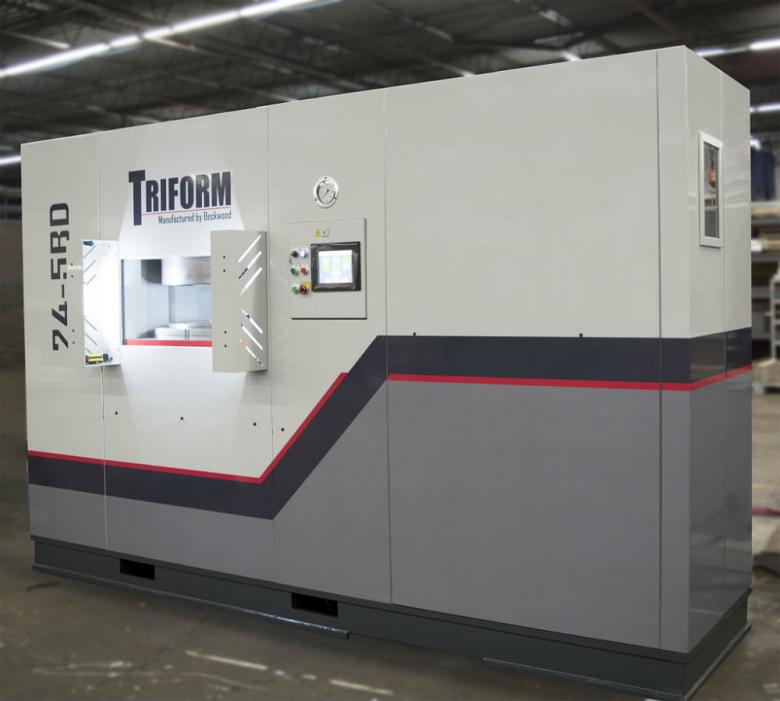
Triform to manufacture fluid cell sheet hydroforming press for H&R Parts
Beckwood Press Co., a St. Louis-based manufacturer of custom hydraulic presses and automation systems, has been awarded a contract by H&R Parts Co. to manufacture a Triform model 24-5BD fluid cell sheet hydroforming press. With a 24-in.-dia. forming area and 5,000 PSI, the press will support...
Triumph achieves Elite Supplier status from Lockheed Martin RMS
Triumph Group Inc., Berwyn, Pa., has announced that its Triumph Fabrications company located in Hot Springs, Ark., has achieved Lockheed Martin Rotary and Mission Systems (RMS) Elite Supplier status for exceptional supplier performance in support of its Sikorsky Aircraft business. Triumph...
Sheet metal forming, hydroforming conferences to be held in Germany May 15-16
Forschungsgesellschaft Umformtechnik mbH and the Institut für Umformtechnik (IFU) have announced the upcoming international conferences New Developments in Sheet Metal Forming (NEBU) 2018 and New Developments in Hydroforming (NEHY) 2018, to be held May 15-16 in Fellbach, Germany. The conferences...
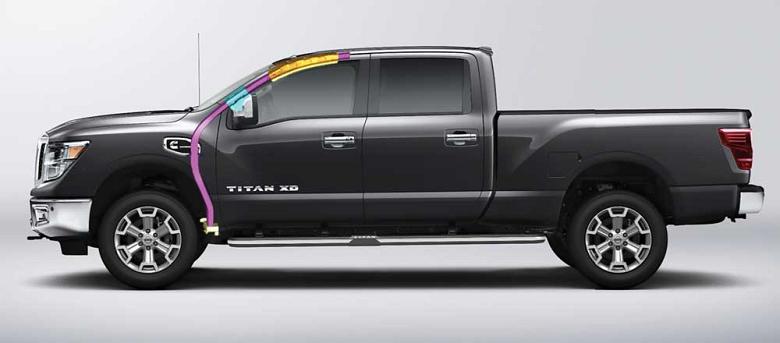
Hydroforming continues to pick up market share, enhance vehicle safety
Redesigned for the 2016 model year, Nissan’s Titan won accolades from Cars.com and U.S. News & World Report. Tier-1 component supplier and designer Vari-Form developed an assembly that reduced part count, reduced vehicle weight, and helped it meet a new crash standard.
-
- From The Fabricator
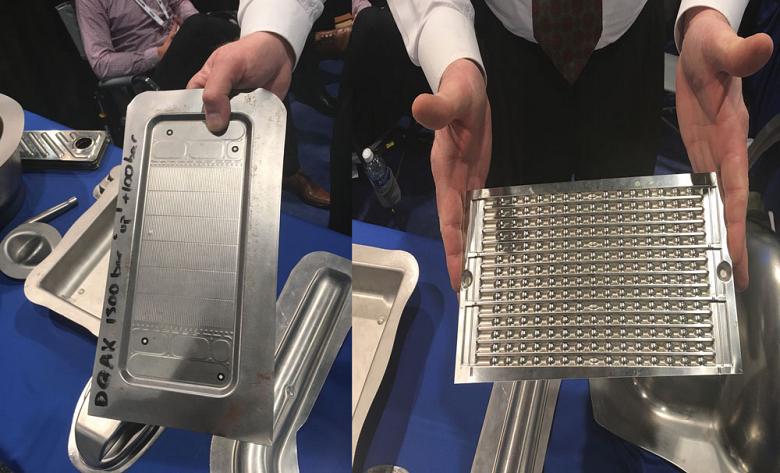
Technology Spotlight: A new take on forming with fluids
If you know anything about hydroforming, you know that a bladder is necessary. Well, that bladder can prove troublesome in some metal forming applications. A new metal forming technology that uses water but does not require a bladder gives manufacturers something to think about as they seek to form intricate metal parts.
Beckwood supplies Triform equipment to international aerospace supplier
Beckwood, St. Louis, has supplied a Triform tray-style fluid cell sheet hydroforming press and an extrusion stretch-forming machine to an India-based aerospace supplier for fulfillment of several newly awarded contracts. With a 24- by 96-in. forming area and a dual shuttle system, the model...
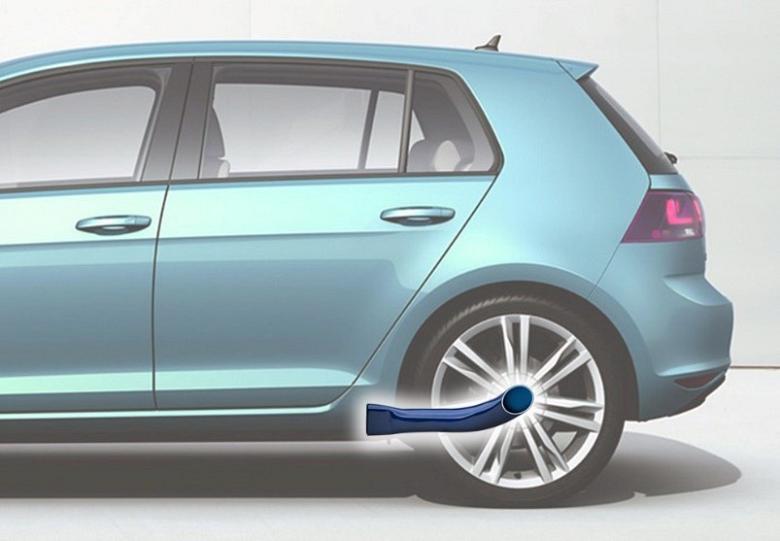
Vari-Form provides rear suspension trailing arms to Volkswagen
Livonia, Mich.-based Vari-Form has announced that it is producing right and left trailing arms for the rear suspension system of the Volkswagen Golf A7 using pressure-sequence hydroforming technology. The trailing arms, hydroformed from closed-section tube, maintain inherent strength while...
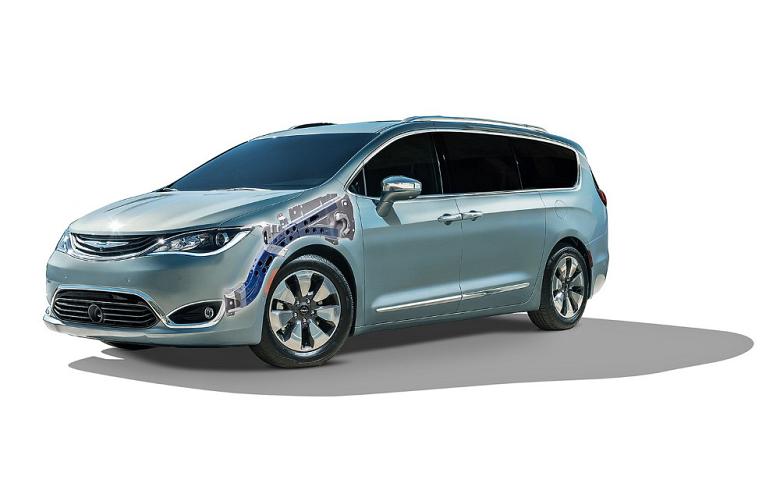
Vari-Form load beam assembly meets requirements for 2017 Chrysler Pacifica
Livonia, Mich.-based Vari-Form has designed and manufactured the front-end load beam assembly for the 2017 Chrysler Pacifica®, a minivan re-engineered from the ground up and built on a new platform. “Very tight packaging was one of the challenges we faced on this technically advanced van,”...
subscribe now
The Fabricator is North America's leading magazine for the metal forming and fabricating industry. The magazine delivers the news, technical articles, and case histories that enable fabricators to do their jobs more efficiently. The Fabricator has served the industry since 1970.
start your free subscription- Podcasting

Seth Feldman of Iowa-based Wertzbaugher Services joins The Fabricator Podcast to offer his take as a Gen Zer...
- Trending Articles
1
Aluminum MIG wires offer smooth feeding, reduced tangling
2
JM Steel triples capacity for solar energy projects at Pennsylvania facility

3
Fabricating favorite childhood memories

4
The role of flux in submerged arc welding performance
5
Rocklin Manufacturing celebrates 90th anniversary