











Contributing Writer

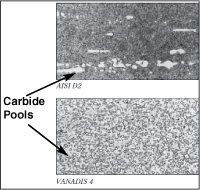 |
| Figure 1 When you grind tool steel sections such as D2, M4, and powdered metals, you actually are grinding small carbide pools. Photos courtesy of Bohler Uddeholm. |
If you find your daily activities include tasks such as fixing broken pads, welding a damaged die section after a dowel falls out of the upper half, digging two parts out of a draw die, or replacing pilots that have pierce holes in a progressive die, that's die repair.
Unnecessary die repair stems from several basic shortcomings, namely, poor die design, setup procedures, tool design, and maintenance techniques.
It's discouraging how many die maintenance programs revolve around a poor die design. For example, let's say coil springs are breaking in the die every 2,000 strokes of the press. To ensure that they are replaced before breakage, you could schedule spring replacement every 1,500 strokes. However, the springs should actually last at least 10 times longer than that.
The root of the problem most likely is that the die in which the spring is used was designed improperly or that the spring is deflecting far beyond its most efficient rate. The long-term solution is to fix the root problem by using a longer spring or a gas cylinder.
If your daily activities consist of sharpening cutting sections because of normal wear, replacing springs before their expected life cycle, periodically cleaning the dies and inspecting them for loose dowels or sections, and resurfacing and lubricating components as necessary, that's die maintenance.
Unfortunately, most of the individuals given the job title "die maintenance" spend little time executing actual preventive maintenance. Most of the time they are running around the stamping shop like chickens with their heads cut off, trying to put out major production fires—addressing splitting problems in a forming die; trying to make adjustments for a 90-degree bend; and shimming this, that, and the other thing in an effort to make the parts fit the checking fixtures.
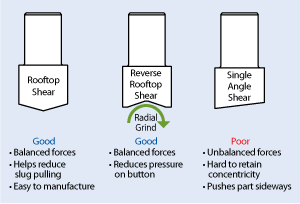 |
| Figure 2 Grind shear angles so the cutting action is balanced. |
True preventive maintenance procedures involve items that need to be addressed regularly, regardless of how well the die was engineered.
Sharpening Cutting Sections
Cutting sections and punch edges break down over a period of time, resulting in part defects such as burrs, feeding problems, and safety issues, to name just a few. For this reason, these die sections and punches must be sharpened periodically.
'Here are some guidelines to follow when sharpening cutting sections, pierce punches, and buttons:
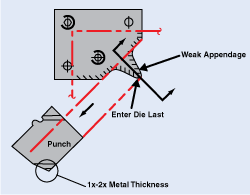 |
| Figure 3 Grind your die section so that small, weak appendages enter the die last, which helps prevent impact shocking and possible breakage of a small, weak cutting feature. |
Shimming die sections may be necessary to maintain the timing of each die station. Following are some guidelines for shimming:
Clean your dies regularly and inspect them for loose dowels, screws, and broken springs. Following are some guidelines for die inspection:
These are just a few of the basic maintenance items that need to be addressed. Create your own list based on your needs, but be sure you're setting a true die maintenance program and not a die repair program.
Until next time ... Best of luck!

The Fabricator is North America's leading magazine for the metal forming and fabricating industry. The magazine delivers the news, technical articles, and case histories that enable fabricators to do their jobs more efficiently. The Fabricator has served the industry since 1970.
start your free subscription


Easily access valuable industry resources now with full access to the digital edition of The Fabricator.

Easily access valuable industry resources now with full access to the digital edition of The Welder.
Easily access valuable industry resources now with full access to the digital edition of The Tube and Pipe Journal.
Easily access valuable industry resources now with full access to the digital edition of The Fabricator en Español.
In this episode of The Fabricator Podcast, Caleb Chamberlain, co-founder and CEO of OSH Cut, discusses his company’s...