











The FABRICATORSTAMPING JournalPractical Welding TodayTube & Pipe Journalthefabricator.comCanadian Industry ManufacturingGreen ManufacturerPWT TVTPJ TV

 
Authors - Gerald Davis
Home \ Author \ Gerald Davis

Articles written by Gerald Davis


Gerald Davis

Gerald Davis

Contributing Writer
Gerald Davis Design and Consulting


Results: 78

Job shop estimating: Watching the clock in the fabrication sequence

In this fifth installment of columnist Gerald Davis' series on job estimating, he describes the use of time standards that are based on shop experience to guide the estimator’s prediction of expenses.


Job shop estimating: Expenses driven by events in the fabrication sequence

In this fourth installment of Columnist Gerald Davis' series on job estimating, he describes the use of planning outlines—which resemble work orders—to structure the estimator’s report of production expenses.


Job shop estimating: Compatibility issues

In this third installment of Columnist Gerald Davis' series on job estimating, he describes why an estimator cares how well a project fits the capabilities of the shop.


Job shop estimating: A historical perspective

Columnist Gerald Davis continues a series of columns that address one of the most important activities related to shop profitability: job estimating. In this second installment, he describes how an estimator can use the shop’s manufacturing history to refine the predictions of future expense.


Job shop estimating: A business process examined in 12 steps

Columnist Gerald Davis begins a series of columns that address one of the most important activities related to shop profitability: job estimating. In this first installment, he describes how an estimator needs to understand what processes are needed to quote accurately, as well as to determine...


3-D CAD: Part marking matters

Columnist Gerald Davis walks a CAD operator through the steps to set up an efficient way to apply part marking to any design.


3-D CAD: Productivity, reliability, and responsiveness

Columnist Gerald Davis discusses when formality should enter a CAD operator's workflow and offers up an example of how a simple CAD task might go.


3-D CAD: Handling imported data during sheet metal design

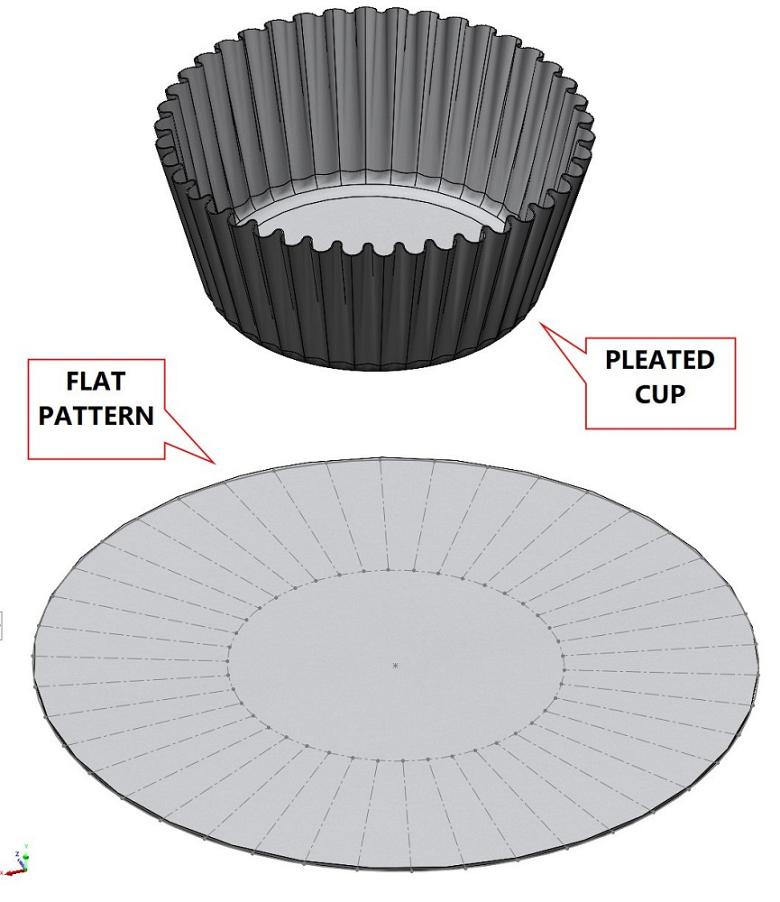
Columnist Gerald Davis is ready to rip into the process of converting imported 3-D parts to flattened parts.


3-D CAD: Setting up a costing tool

Cost analysis within 3-D modeling software won't replace cost estimating, but it still can be a helpful tool.


3-D CAD: Design optimization

Columnist Gerald Davis begins his exploration on how cost management tools in 3-D modeling software can be used to deliver cost-efficient and functional part designs.


3-D CAD: Modeling with product variation as the design intent

Columnist Gerald Davis provides a guide to connecting dimensions and custom properties to equations, which will make part design changes much easier to deal with down the road.


3-D CAD: Modeling with product documentation as the design intent

Columnist Gerald Davis focuses on creating better illustrations and models to make life easier for parties involved in downstream operations.


3-D CAD: Bill of materials construction in project documentation--PartII

Columnist Gerald Davis has populated the bills of material with data and now focuses on the model that will accompany the BOM to the manufacturing floor.


3-D CAD: Bill-of-materials construction inproject documentation--Part I

Columnist Gerald Davis takes a look at the appropriate way to construct a bill of materials as he continues his cutting table project.


3-D CAD: Customization in project documentation

Columnist Gerald Davis reveals the most convenient way to set up a bills of material and related title blocks.


3-D CAD: Project documentation

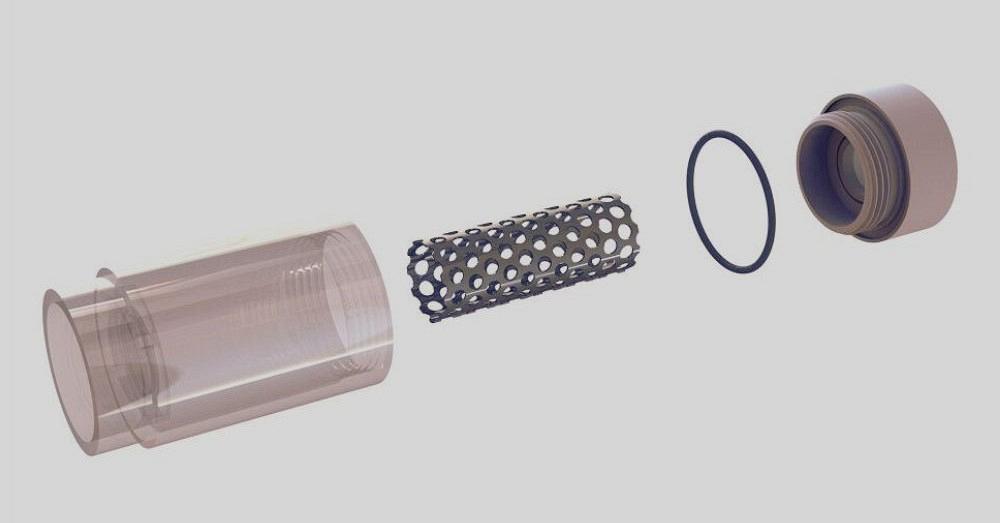
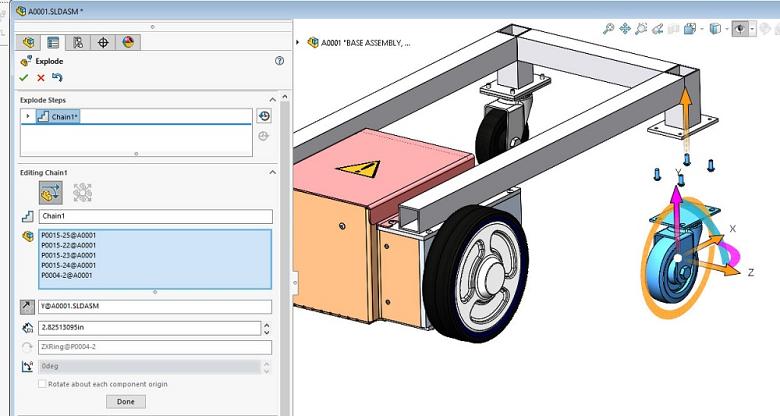
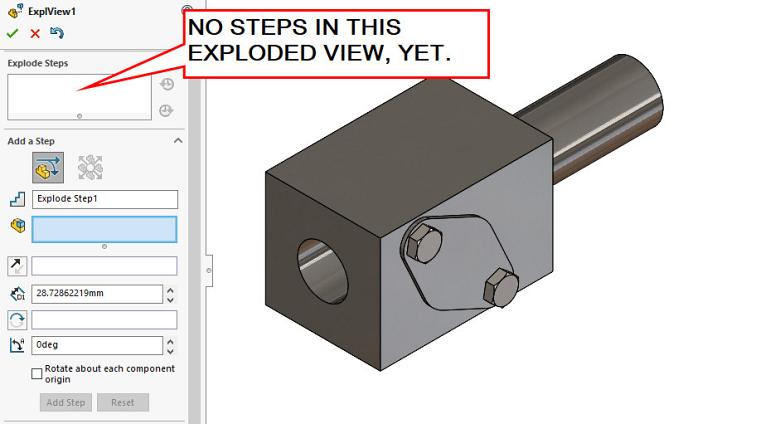
Columnist Gerald Davis explores the world of exploded views as he prepares the 3-D model to be much more than just a graphical representation of the part to be fabricated.


3-D CAD: Project definition

Columnist Gerald Davis focuses his 3-D CAD skill on designing a welding table. He invites readers to participate in the creation of this support structure.


3-D CAD: Library features

Columnist Gerald Davis shows CAD users how to create a feature for the library so that it may be used in other models.


3-D CAD: Document management and revision control

Columnist Gerald Davis offers fabricators guidance in dealing with an engineering change order to a 3-D CAD model.


3-D CAD: Producing a 2-D flat layout from 3-D data

After demonstrating how a 3-D concept model can be turned into a production model, which is useful for as long as the project has the green light, columnist Gerald Davis takes a look at how you can take a concept model and turn it into a simple flat layout for CNC fabricating equipment.


3-D CAD: Well-behaved bend reliefs

Columnist Gerald Davis is looking to refine a 3-D model so that it is easier to laser-cut. To do so, he relies on a popular addition to his modeling software package.


3-D CAD: The cure for the bad isometric view

Columnist Gerald Davis walks the fabricator through a 3-D modeling process to learn how to work with a file that has broken elements.


3-D CAD: Unfolding problems

Columnist Gerald Davis provides some tips on getting that 2-D drawing--derived from the 3-D model--to manufacturing in the best shape possible.


3-D CAD: Modeling with limited resources

Columnist Gerald Davis reminds us that CAD modeling has its limitations and that it's still necessary to build a prototype rather than just relying on simulation.


3-D CAD: Modeling a nest of parts

Columnist Gerald Davis bypasses CAM software and uses his 3-D software to create a nest of parts.


3-D CAD design: Modeling a shop cart

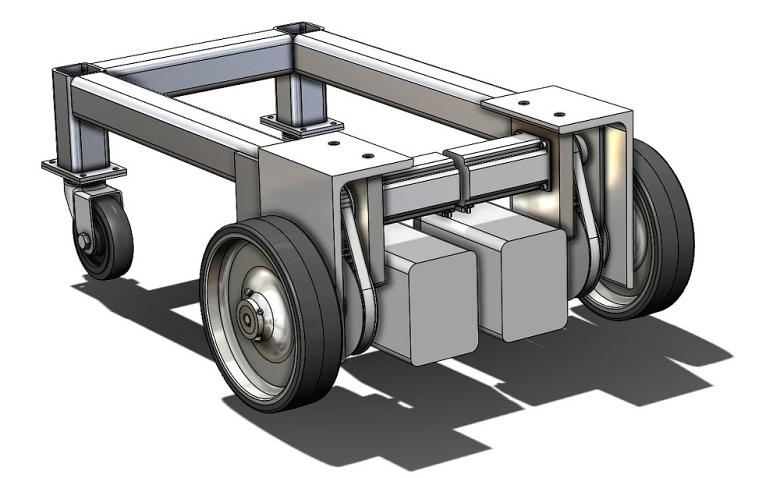
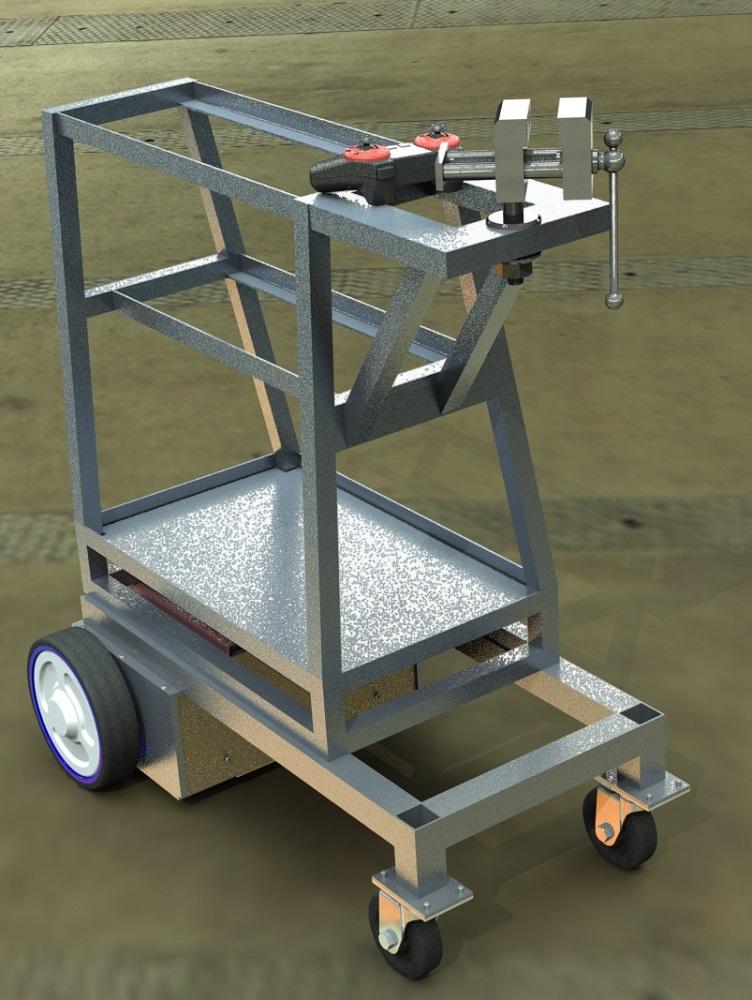
Columnist Gerald Davis tackles a fabricating project that every shop takes on every so often: the shop cart.


3-D CAD design: The next dimension of services you will offer?

Columnist Gerald Davis provides readers with an idea on how transforming a 2-D sketch into a 3-D model can prove helpful in bettering a customer's original design.


Putting 3-D CAD on the grill, Part XII

Wrapping up his design work on the Shashlik Grill, columnist Gerald Davis now turns his attention to preparing final versions of project documentation.


Putting 3-D CAD on the grill, Part XI

Working on a 3-D design for the Shashlik Grill, columnist Gerald Davis has turned his attention to the sliding charcoal plan, but this particular component challenges the top-down modeling approach that has been used up until this point in the project.


3-D CAD on the grill, Part X

Working on a 3-D design for the Shashlik Grill, columnist Gerald Davis continues working on the top-level assembly. This time he's modeling two skewer supports.


Putting 3-D CAD on the grill, Part IX

Working on a 3-D design for the Shashlik Grill, columnist Gerald Davis continues working on the top-level assembly. This time he's modeling two end skirts and two side skirts.


Putting 3-D CAD on the grill, Part VIII

Working on a 3-D design for a Shashlik Grill, columnist Gerald Davis continues his work of locating features in the context of the top level assembly.


Putting 3-D CAD on the grill, Part VII

Working on a design for a Shashlik Grill, columnist Gerald Davis turns his attention to fasteners as it's time to shore up the support structure.


3-D CAD on the grill, Part VI

Working on a design for a Shashlik Grill, columnist Gerald Davis reminds CAD designers that it is a good practice to test parametric links as the design progresses.


The impossible dream

From the CAD operator's point of view, he can use several tricks for sheet metal modeling that can keep the design in the realm of can-do manufacturing—the land where the tooling and metal processing technologies are commonly available.


Putting 3-D CAD on the grill - Part IV

When it comes to providing exact details for the bill of materials for a 3-D design job, columnist Gerald Davis provides some pointers to help speed up the project.


Putting 3-D CAD on the grill—Part III

Working on a design for a Shashlik Grill,columnist Gerald Davis provides guidance so that the designer ends up with a design that allows him to explore various changes to the size of the overall product while having the component parts stretch or shrink automatically


Putting 3-D CAD on the grill

Gerald Davis begins this year with a series of product development case studies, taking an idea and creating the virtual model of it.For this first installment, Davis designs a barbecue grill.


Flat responsibility in sheet metal modeling

The most important role of a CAD operator is to verify that the design can be flattened. Columnist Gerald Davis provides some guidance on that subject.


Top-down modeling

A reader has a question about modeling an assembly comprised of three plates and tubing. Columnist Gerald Davis provides guidance.


The most important output of 3-D CAD modeling

The most important output from a CAD system is the bill of material. Columnist Gerald Davis gives us an idea of just how much detail should go into creating a BOM.


Love of loft in 3-D CAD modeling

Leaning to use the loft tool in 3-D CAD modeling takes some work, but it can come in handy in certain circumstances.


Getting swept away in 3-D CAD modeling

Like an extrude or revolve, a sweep is a tool for modeling a 3-D shape. A sweep consists of three basic elements--a profile, a path, and a set of rules for "sweeping" the profile along the path. A sweep can be a powerful tool when modeling 3-D shapes, according to columnist Gerald Davis.


Modeling in a 3-D CAD system

Among the tools in the 3-D CAD toolkit—extrudes, revolves, sweeps, and lofts—the first two can be used to create identical parts, but they don't work the same way. Depending on which process you choose, the time the computer needs to model and rebuild the part can vary substantially.


Dimensioning in a 3-D CAD system

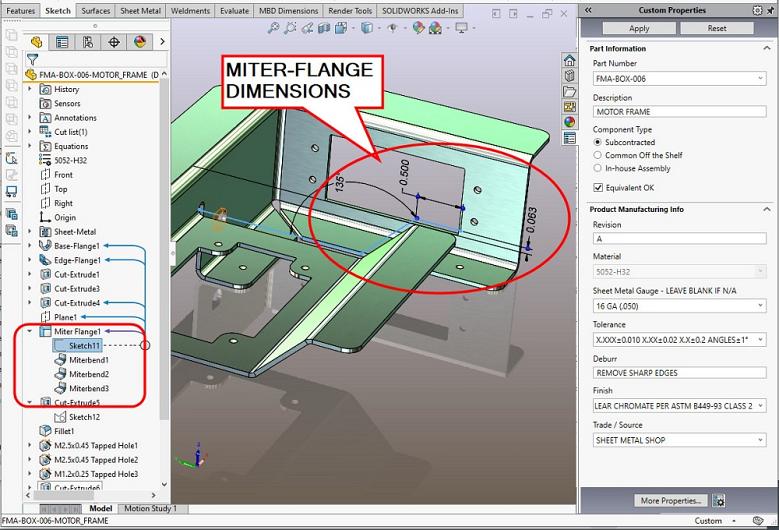
Columnist Gerald Davis explains that preparing a 3-D CAD model without dimensions may look great, but it doesn't really do anybody any good. For example, a 3-D CAD model with dimensions helps quality control inspectors.


Sketching in a 3-D CAD System

Columnist Gerald Davis describes different approaches to sketching in a 3-D environment.


The real world of 3-D CAD assemblies

Columnist Gerald Davis describes the benefits of working with 3-D CAD assemblies.


3-D CAD drawings in a 2-D world

Columnist Gerald Davis discusses the importance of delivering a clear illustration and how it can make an impact on the final fabricated product.


Thinking inside the box

Columnist Gerald Davis delves into why top-down design might be useful when modeling a metal fabrication in 3-D CAD.


3-D CAD strengthens customer bond

Columnist Gerald Davis asks his fabricating readers if they know what it truly takes to keep up a fully functioning 3-D CAD software system.


One easy piece to model

Columnist Gerald Davis believes it's a shame when a shop doesn't use its 3-D CAD software to its fullest potential. That's why he takes the reader through a modeling tutorial.


Getting a handle on 3-D CAD modeling

Columnist Gerald Davis provides the reader with a brief overview of some of the handy 3-D CAD tools he uses when doing basic modeling techniques.


Unfolding truth about flats

Columnist Gerald Davis reveals the usefulness of unfolding parts on the computer screen.


Machined-part modeling in 3-D CAD

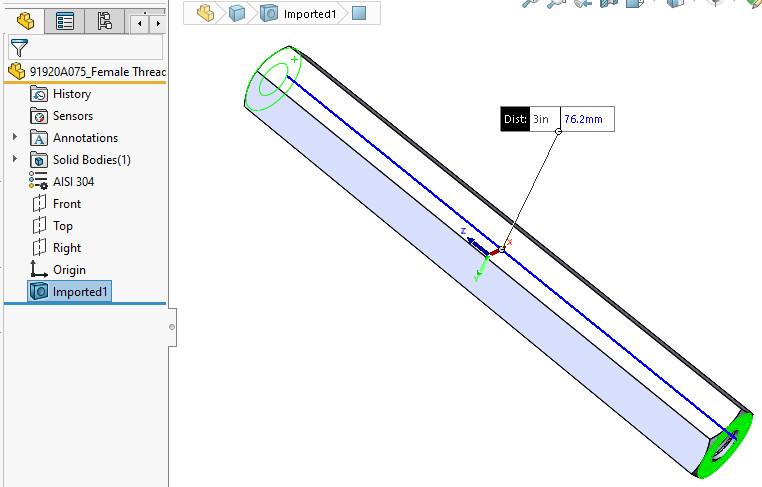
Columnist Gerald Davis guides the reader through the 3-D design of a coupling that needs to be machined. He starts off with a bad example of how to do it and works his way toward a much better process.


3D CAD modeling of sheet metal parts

The main variation in sheet metal modeling technique is when to let the 3D CAD system know that the part is to be treated as sheet metal. Columnist Gerald Davis walks us through three different ways to accomplish this.


What CNC programmers wish you knew

State-of-the-art CNC programming systems speed the first stage of CNC programming by allowing the programmer to import CAD models to define the geometry of the part. That's just the first part, however. To really speed up the design phase, CAD programmers should keep several tips in mind.


Essential CAD: A starting point

Before a company purchases a CAD software package, the management team should start with a list of priorities that it expects the software to address. Of course, these priorities should be tailored to the company's mission. It's also important to keep in mind some of the basics of the virtual...


Wise words from the mountaintop—Part 12


Wise words from the mountaintop—Part 11


Wise words from the mountaintop—Part 10


Wise words from the mountaintop—Part 9


Wise words from the mountaintop—Part 8


Wise words from the mountaintop—Part 7


Wise words from the mountaintop—Part 6


Wise words from the mountaintop—Part 5


Wise words from the mountaintop—Part 4

Editor's Note: This is the fourth episode in a mountaintop dialog that Gerald has been having with a "wise business guru." They have been talking about customers and the time line of money.


Wise words from the mountaintop—Part 3


Wise words from the mountaintop—Part 2


Wise words from the mountaintop—Part 1


Mixed Metals Reactions

Under controlled conditions, aluminum and steel powders can be mixed to create a chemical reaction to produce heat for welding. If you mix these materials under uncontrolled conditions, you will want to call the fire department.


Production economics

Communicate your production economics in meaningful ways to your clients. Be clear about how you measure performance and regulate processes.


Keeping peace and harmony with yourself, with your staff

Balance in all aspects of a manager's life and mutual respect between bosses and employees may be key to a successful business. Obsession, intensity, burning desire, and high energy are fueled by fun, recognition, income, and the responsible exercise of authority.


Some 'near-jig' ideas

In-process sampling and between-process checks can prevent problems at the production stage. Although using an inspection jig can be costly, some testing approaches that are not as rigorous as using an inspection jig are: stacking and blocking a sheared batch in order to scan the batch for...


Organizational planning

The author discusses the importance of eliminating duplicated responsibilities, even in small job shops. The effectiveness of a company is improved when each person is responsible for specific tasks.


Emotional thrills

When you ride a roller coaster, you know that it is supposed to be fun and will last only a frew minutes. The job shop you're working in isn't supposed to be anything like a rollercoaster ride.


An industry perspective

On the positive side, job shops continue to be innovative and improve productivity; materials and software are improving; entry-level positions normally can be filled.


Punching tips

The author discusses what not to do to manage slug ejection. He mentions several tooling maintenance errors that he has made over the years, as well as what machine operators can do if they want to experience slug ejection difficulties. He concludes by stating that the easiest solution to slug...


Design tips for sheet metal: Bend relief, small holes, hole distortion near bends, and minimum flange widths

The article discusses making small holes and when to use a punch or laser cutter, inside radius measurements and how they differ depending on whether you are coining or air bending on a press brake, and adding bend relief to prevent tearing material.