















|
|
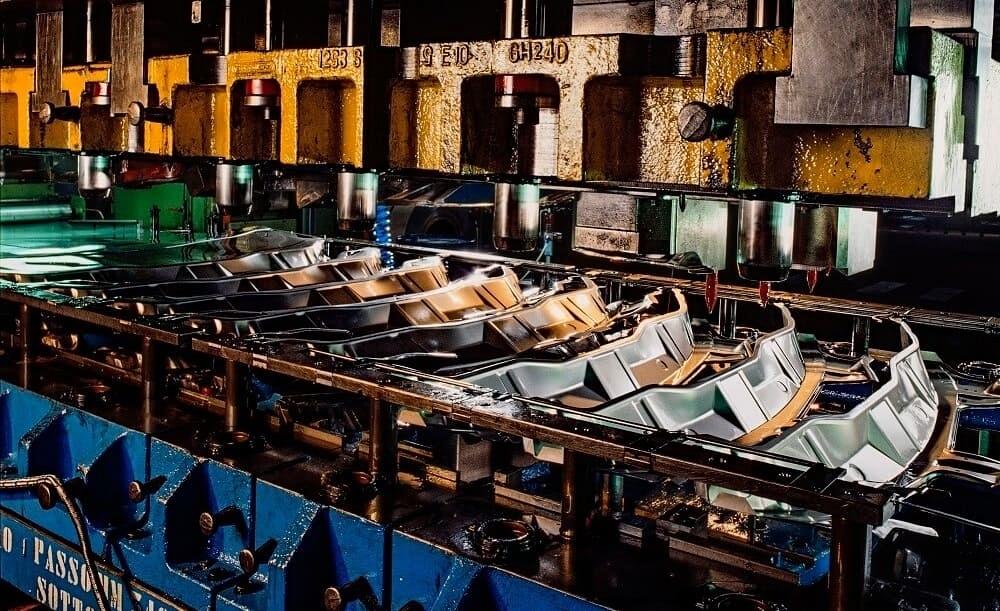
Update: Hot-stamping boron-alloyed steels for automotive partsCPF has conducted experiments using finite element simulation of the hot stamping process. The process can help manufacturers predict such final part properties as thickness, temperature, and hardness distribution.
Publish date: March 10, 2011 |
|
|
Lubrication and galling in stamping of galvanized AHSSForming of galvanized AHSS involves higher contact pressures at the tool-workpiece interface compared to forming mild steel. Under these severe interface conditions, improper selection of lubricants, tool materials and tool coatings may result in high scrap rates and galling in stamping...
Publish date: April 15, 2008 |
|
|
Dissecting defects - Part IIIEditor's Note: This article is part of a three-part series. Part I categorizes defect types and discusses the factors that affect formed part quality; Part II covers various destructive and nondestructive tests for evaluating incoming material; and Part III is an introduction to process...
Publish date: December 11, 2007 |
|
|
Dissecting defectsDissecting Defects is a three-part series.
Publish date: December 11, 2007 |
|
|
Dissecting defects - Part IIEditor's Note: This article is part of a three-part series. Part I categorizes defect types and discusses the factors that affect formed part quality; Part II covers various destructive and nondestructive tests for evaluating incoming material; and Part III is an introduction to process...
Publish date: November 6, 2007 |
|
|
Dissecting defects - Part IEditor's Note: This article is part of a three-part series. Part I categorizes defect types and discusses the factors that affect formed part quality; Part II covers various destructive and nondestructive tests for evaluating incoming material; and Part III is an introduction to process...
Publish date: October 9, 2007 |
|
|
Blanking developments - Part IIIDuring high-speed blanking, press stroking rate and punch speeds, are higher than in conventional blanking. As a result, the shear zone has a higher strain rate, which affects a workpiece's sheared surface temperature and the tool surface.
Publish date: September 11, 2007 |
|
|
Blanking developmentsFineblanking allows the production of sheet metal components with smooth edges in a single press stroke. This column discusses basic terminology and the principles of this process.
Publish date: September 11, 2007 |
|
|
Blanking developments - Part IIFineblanking in various forms is increasingly becoming accepted by the automotive industry for producing sheet metal components with smooth edges that don't require additional finishing operations.
Publish date: August 8, 2007 |
|
|
Blanking developments - Part IFineblanking allows the production of sheet metal components with smooth edges in a single press stroke. This column discusses basic terminology and the principles of this process.
Publish date: July 10, 2007 |
|
|
Stamping research gains supportGlobal competition continues to force the metal forming industry to reduce costs, improve technology, and increase productivity. With these trends in mind, the Ohio State University (OSU) and Virginia Commonwealth University (VCU) established in June 2006 the Center for Precision Forming to focus...
Publish date: June 12, 2007 |
|
|
Servo press forming applications Part IIIThis column discusses several applications of servomotor-driven mechanical presses for forming at room temperature and at elevated temperatures.
Publish date: May 8, 2007 |
|
|
Servo press forming applicationsA servomotor gives a press slide motion flexibility in terms of accurate speed, motion, and position control. This flexibility produces infinite slide motion variations that may improve part quality and operations such as painting and assembly during one press stroke.
Publish date: May 8, 2007 |
|
|
Servo press forming applications Part IIServo presses are classified into two main types based on their drive systems: direct drives with high-torque, low-speed servomotors, or low-torque, high- speed servomotors.
Publish date: April 10, 2007 |
|
|
Servo press forming applications Part IA servomotor gives a press slide motion flexibility in terms of accurate speed, motion, and position control. This flexibility produces infinite slide motion variations that may improve part quality and operations such as painting and assembly during one press stroke.
Publish date: March 13, 2007 |
|
|
Hot-stamping boron-alloyed steels for automotive parts - Part IIITo accurately model the hot-stamping process, FE simulation needs to account for the mechanical, thermal, and microstructural changes in the workpiece.
Publish date: February 13, 2007 |
|
|
Hot-stamping boron-alloyed steels for automotive parts - Part IHot-stamped parts are being used increasingly in cars in Europe and North America. Ultrahigh-strength steels, like boron alloys, which meet automotive safety and crash requirements, are difficut to form with cold stamping, so hot stamping with die quenching has been applied.
Publish date: February 13, 2007 |
|
|
Hot-stamping boron-alloyed steels for automotive parts - Part IICompared with cold-formed parts, hot-stamped parts provide better formability at high temperatures and exhibit no springback on the final part.
Publish date: January 18, 2007 |
|
|
Multipoint-control die cushion systems for stamping complex partsIn deep drawing of complex, asymmetrical parts such as stainless steel kitchen sinks, blank holder force (BHF) needs to be controlled locally to regulate the flow of the sheet metal. An MPC blank holder system allows this control by placing individually programmable cushion pins around the blank...
Publish date: November 7, 2006 |
|
|
Warm forming magnesium, aluminum tubes
Publish date: October 3, 2006 |
|
|
Evaluating dry film lubricants for automotive applications Part IIIIn recent studies, dry-film lubricants have been shown to give better lubrication conditions when compared to oil-based liquid lubricants. This factor, as well as savings in the amount of lubricant used, has helped increase the use of dry-film lubricants in the automotive industry for forming of...
Publish date: November 8, 2005 |
|
|
Air-assisted forming of aluminum alloy for automotive componentsReducing weight while maintaining or improving functional requirements is one of the major goals of automotive design and manufacturing, as it decreases fuel consumption and improves structural design. As a result of these considerations, the use of aluminum alloys in car manufacturing continues...
Publish date: August 9, 2005 |
|
|
Hydroforming tapered engineered tubesHydroforming often results in localized thinning. Using engineered tubesÂ--tubes that have a thicker wall where the tube is most prone to thinning--Âcan result in a stronger finished component.
Publish date: June 8, 2004 |
|
|
Using finite element analysis to roll-form tubesRoll forming is a common method for producing steel tubes. It is a continuous process in which a strip is guided through several sets of rolls that form the strip into the desired shape. After the final shape is achieved, tube edges are welded together to form a closed section. After the welding...
Publish date: October 9, 2003 |
|
|
Predicting springback in air bending, straight flangingAll businesses tied to the metal forming industry are scrambling to find areas in which they can lower costs without sacrificing quality. Adding to this burden are a tight cash flow and a lack of financial resources to invest in process improvement equipment. Therefore, the savings must come from...
Publish date: October 9, 2003 |
|
|
Using binder force control, force modulation, to improve part quality, stamping efficiency
Publish date: August 28, 2003 |
|
|
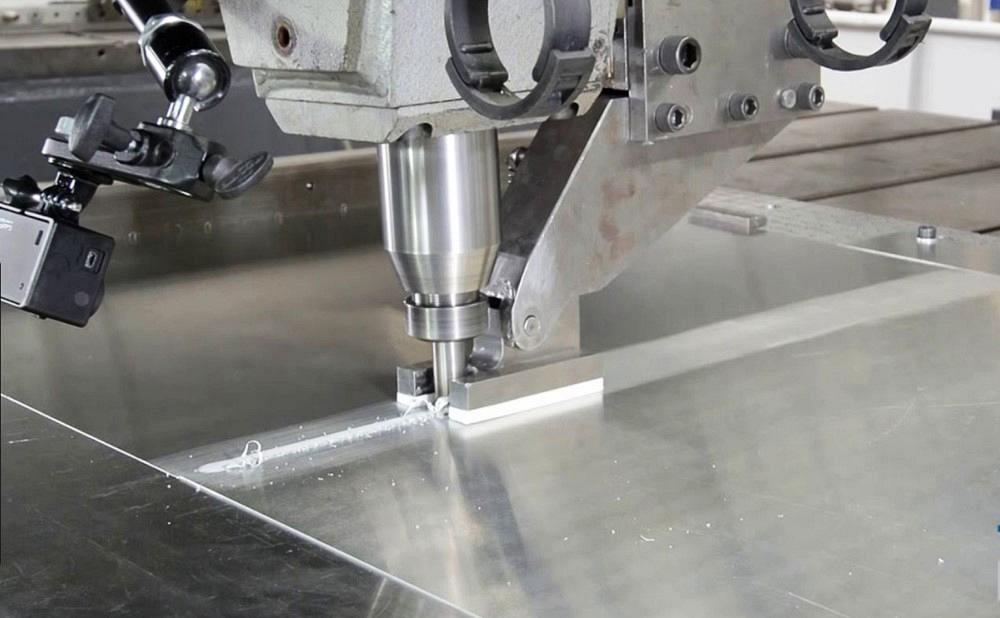
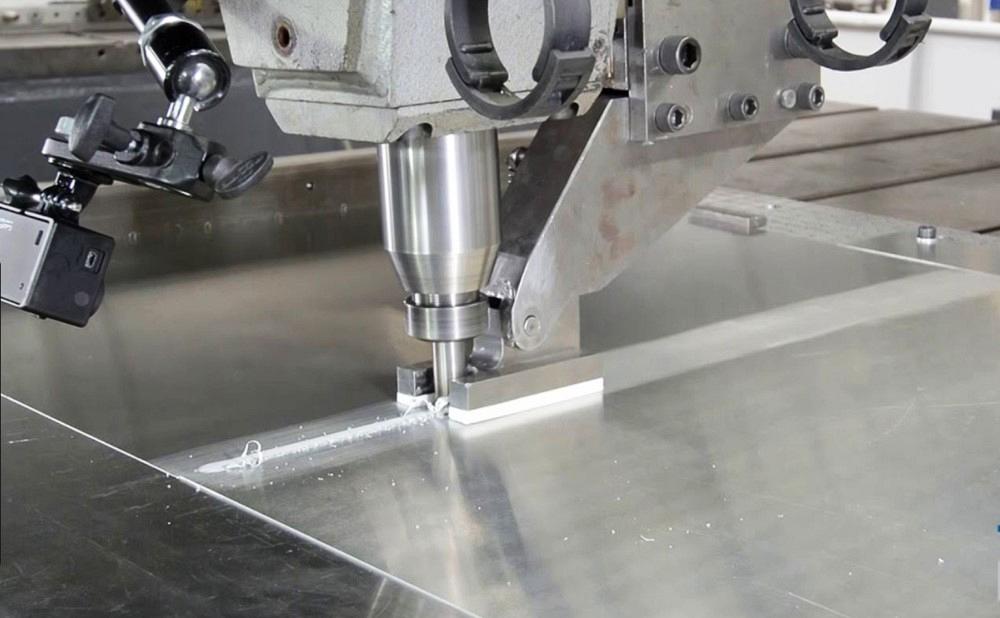
Dieless NC formingDieless NC forming or incremental sheet forming is a numerically controlled incremental process that can produce complex shapes from various materials. The process is based on localized plastic deformation in the sheet metal blank. It was developed as an alternative manufacturing method to...
Publish date: June 12, 2003 |
|
|
Sheet hydroforming in automotive applicationsSheet hydroforming can be used in the automotive industry for forming alloys with low formability and prototype applications, among other handy applications.
Publish date: April 15, 2002 |
|
|
Design rules for forming aluminum stampings—Part 2
Publish date: February 2, 2002 |
|
|
Design rules for forming aluminum stampings—Part 1This brief overview discusses rules for aluminum stamping involving: die clearance, die radius, punch radius, minimum bend radii, round cups, rectangular box parts, and overhang limit.
Publish date: February 2, 2002 |
|
|
The importance of the n value in sheet formingStrain hardening is represented by the exponent n in the flow stress equation, which approximates the relation between true stress and true strain during plastic deformation of a metal. The constant n plays a crucial role in sheet metal forming, and this brief article describes its effects.
Publish date: October 11, 2001 |
|
|
Successful tube hydroforming: Watching parameters, accurately simulating the process yield good resultsA typical tube hydroforming system is shown in Figure 1. Within this system, a host of factors must be taken into account, from starting tube geometry and material properties to the quality of the final part (such as thickness distribution and dimensional accuracy).
Publish date: June 15, 2001 |